
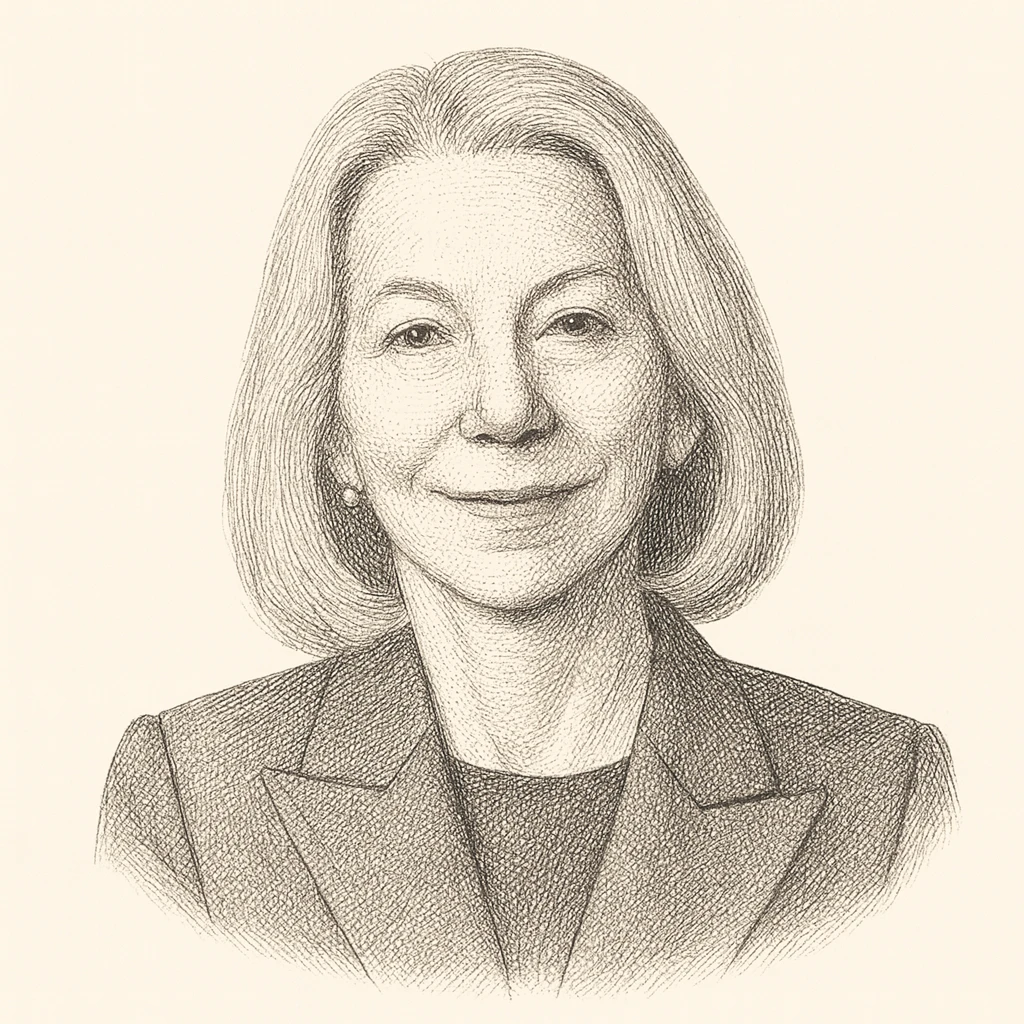
Amy Gutmann is an American political philosopher best known for developing and defending the idea of deliberative democracy, the view that legitimate political decisions rest on public reasoning among citizens rather than merely on the aggregation of preferences through voting or bargaining. Working within the liberal-democratic tradition and drawing on both Rawlsian political philosophy and older civic-republican concerns, she argued that citizens and their representatives owe one another reasons that others can reasonably accept, and that democratic institutions should be evaluated in part by how well they foster mutual justification. Much of this work was developed in a long-running collaboration with the political theorist Dennis Thompson, with whom she explored how deliberation might help societies cope with deep moral disagreement without dissolving into either coercion or mere compromise.
A central theme in her thought is the role of education in a democracy. She contended that a democratic society has a legitimate interest in cultivating citizens capable of deliberating about their shared life, and she examined how schools, families, and the state each bear responsibility for shaping democratic character while respecting pluralism and individual liberty. This concern with civic formation connects her democratic theory to practical questions about curricula, the limits of parental and state authority, and how democracies reproduce themselves across generations. She also wrote about identity, multiculturalism, and the accommodation of difference, contributing to debates over how liberal democracies should respond to claims for recognition made by cultural and religious groups.
Gutmann is notable for combining academic philosophy with institutional leadership and public service. She spent much of her career as a professor and administrator, becoming a prominent university president, and she led a national advisory body on bioethics that applied deliberative principles to contested questions in science and medicine. This practical engagement reflected her conviction that democratic theory should inform how real institutions handle moral controversy. Her influence lies in helping to shift attention among political theorists and practitioners toward the quality of public reasoning, and toward the conditions—educational, procedural, and cultural—that make genuine deliberation possible. Alongside thinkers such as Jürgen Habermas and John Rawls, she is frequently cited as a key figure in the deliberative turn in late-twentieth-century democratic theory, and her emphasis on reciprocity and accountability continues to shape discussions of democratic legitimacy.
Amy Gutmann is associated with Moderate Liberal. See the archetype