
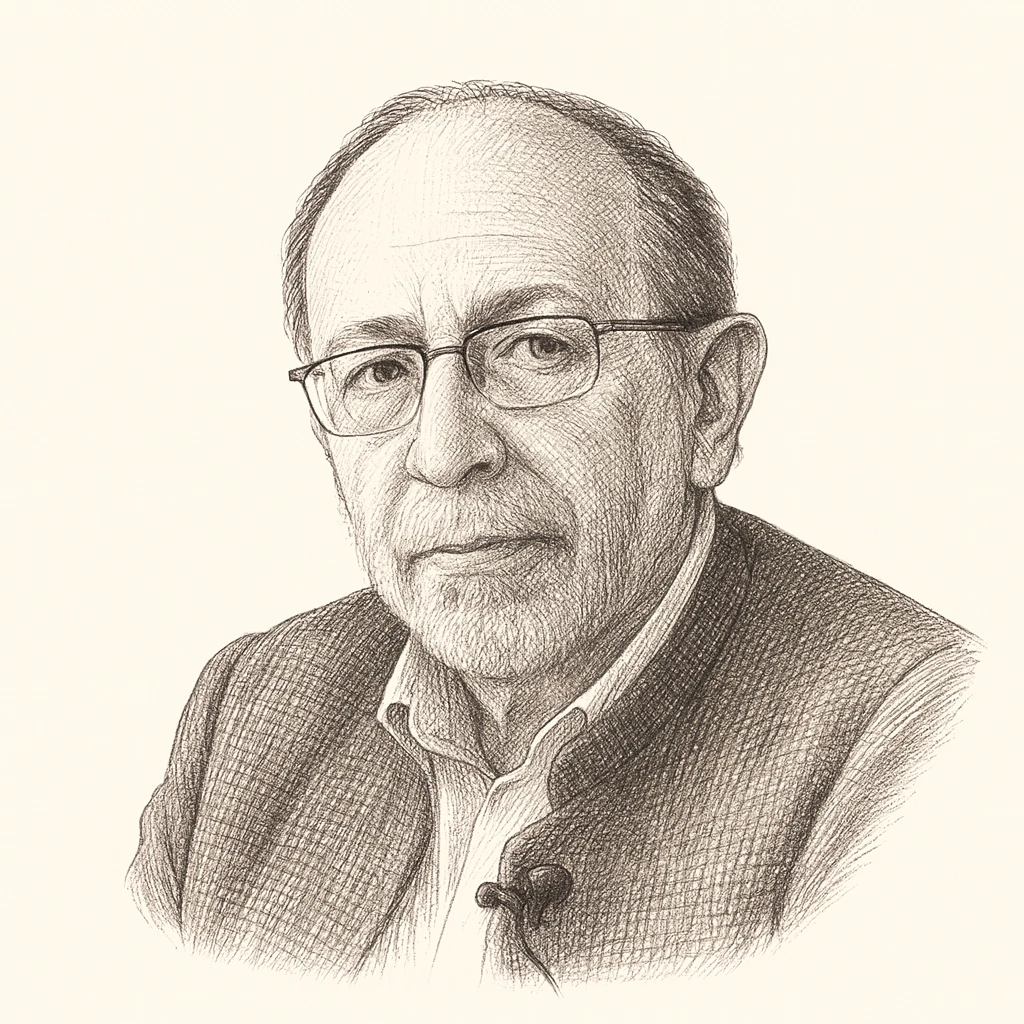
Alain de Benoist is a French philosopher and essayist regarded as the principal architect of the European New Right (Nouvelle Droite), the intellectual current organized in the late 1960s around the think tank GRECE, which he helped found. His project was self-consciously metapolitical: rather than seeking immediate power, he argued that lasting political change follows from winning the battle of ideas and cultural assumptions, a strategy he framed in terms borrowed from Antonio Gramsci's concept of cultural hegemony. Over decades of prolific writing, he sought to detach right-wing thought from crude nationalism and to give it a philosophical vocabulary drawn from an eclectic range of sources.
His central themes are a sustained critique of liberalism, universalism, and egalitarianism, which he treats as leveling forces that erode distinct peoples and cultures. In their place he advances what he calls the "right to difference" and a defense of rooted collective identities, along with a hostility to American-style consumer capitalism and to what he describes as homogenizing globalization. This framework, often labeled "ethnopluralism," holds that cultures should remain separate and unmixed; the philosopher Pierre-André Taguieff has criticized it as a strategic attempt to disguise racial supremacist ideas behind an anti-totalitarian and egalitarian discourse, and Benoist's work has been closely associated with, and influential upon, identitarian and far-right movements across Europe and beyond.
Benoist's positions have shifted and remain genuinely contested. He has distanced himself from biological racism and from parts of the traditional far right, has criticized certain nationalist parties, and has at times engaged sympathetically with anti-liberal thinkers on the left. Yet his early associations, his critiques of immigration and multicultural society, and the uses to which his ideas have been put remain at the center of any argument about his work. Scholars and opponents charge that his metapolitical strategy furnished a sophisticated intellectual scaffolding for exclusionary politics, lending academic respectability to arguments about incompatible peoples.
His influence lies less in any electoral movement than in this metapolitical method and vocabulary, which have circulated widely among European identitarians, the American alt-right, and figures seeking to modernize anti-liberal thought. Whatever one's judgment of his aims, he is among the most consequential theorists of the contemporary radical right.
Alain de Benoist is associated with Reactionary Strongman. See the archetype